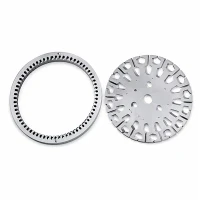
Key Design Considerations for Metal Stamping Dies
Aug 01, 2026
The design of metal stamping dies begins with determining an appropriate stamping process based on the part's structural characteristics, material properties, and production volume. Designers must carefully analyze dimensional accuracy, shape complexity, and forming difficulty to select suitable operations-such as blanking, punching, bending, or deep drawing-and decide whether to use a single-operation die, a compound die, or a progressive die. For complex parts, the sequencing of operations requires careful consideration to minimize unnecessary steps and ensure a compact die structure, while maintaining a stable and reliable production process.
During the structural design phase, dimensions and fit clearances for key components-such as punches, dies, stripper plates, and guiding mechanisms-must be precisely determined. Excessive clearance can compromise the cut surface quality and dimensional accuracy of the stamped part, while insufficient clearance accelerates die wear; therefore, selections should be based on material thickness and properties. For progressive dies, particular attention must be paid to feeding accuracy, pitch, and positioning methods to ensure the material enters each station correctly. Guiding components, such as guide pillars and bushings, require sufficient rigidity and precision to minimize misalignment during stamping and extend the die's service life.
Manufacturing, maintenance, and operational costs must also be taken into account. Key working components should be made from materials suited to stamping conditions, with strength and rigidity verified against expected loads to prevent failure modes like fracture or deformation. Furthermore, the die structure should facilitate machining, assembly, and maintenance; using replaceable designs for high-wear components can simplify upkeep. Finally, parameters such as stamping force, clearance, positioning, and feeding should be fine-tuned based on trial run results to ensure the die meets part quality standards while maintaining high production efficiency and stability.