Application Areas Of Motor Hardware Components
Jul 09, 2026
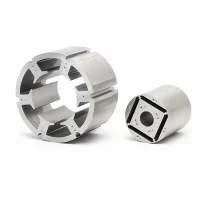
Motor hardware components are widely used in various types of motors and related equipment, serving functions such as support, fixation, connection, positioning, and magnetic flux conduction. In standard industrial motors, common hardware parts include end shields, motor housings, brackets, stator and rotor laminations, and mounting hardware. These components work in conjunction with parts such as bearings, shafts, and windings to ensure the stability of the motor's internal structure, enabling proper energy conversion and power output.
In the home appliance sector, motor hardware is primarily used in products such as air conditioners, refrigerators, washing machines, fans, vacuum cleaners, and kitchen appliances. Since different devices have varying requirements regarding motor size, noise levels, vibration, and operational lifespan, the hardware components employed differ in terms of structure and materials. For instance, small motors often utilize precision stamped parts and thin-sheet formed components to accommodate limited internal space and meet the demands of mass production.
In the automotive and new energy vehicle sectors, motor hardware finds extensive application in drive motors, fan motors, wiper motors, seat adjustment motors, and various auxiliary motors. Drive motors in new energy vehicles demand high standards for component precision, strength, heat dissipation, and reliability; parts such as stator and rotor laminations, housings, end shields, and connection structures must maintain excellent dimensional consistency to withstand long-term operation and complex working environments.
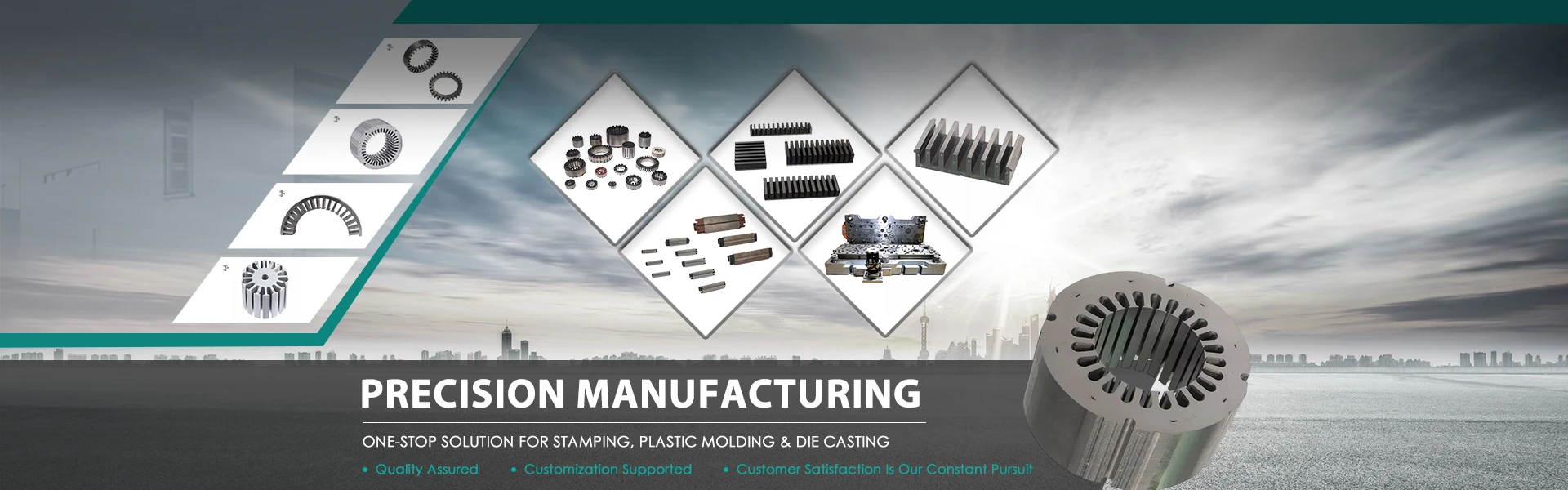
Motor hardware is also utilized in fields such as industrial automation equipment, robotics, machine tools, pumping systems, compressors, power generation equipment, and new energy systems. As automation equipment trends toward miniaturization, higher efficiency, and greater reliability, increasingly stringent demands are placed on the machining precision and mass-production capabilities of motor components. Consequently, manufacturing processes often integrate stamping, precision machining, surface treatment, and automated assembly to enhance component consistency and production efficiency, thereby meeting the specific operational requirements of diverse motor products.