Structural Characteristics of Plastic Injection Molds
Aug 06, 2026
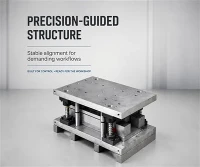
Plastic injection molds are primarily composed of the fixed mold half, moving mold half, mold cavity, core, gating system, guiding mechanism, ejection system, and cooling system. Once the mold closes, the cavity and core work together to form the external contours and internal structure of the plastic product. Depending on the product's shape and molding requirements, molds can be designed as two-plate or three-plate types, or incorporate lateral core-pulling mechanisms-such as sliders or lifters-to accommodate various types of plastic products.
The structural design of an injection mold is closely linked to the product's demolding method. For products featuring undercuts, holes, or lateral recesses, mechanisms such as sliders or lifters are typically required to perform lateral core-pulling during the mold-opening process, thereby preventing the product from becoming trapped by the core. The ejection system uses components like ejector pins, ejector blocks, and ejector sleeves to push the molded product out of the cavity; precise control over ejection positioning and force distribution is essential to avoid defects such as deformation, stress marks ("whitening"), or surface damage.
Injection molds generally feature independent gating and cooling systems. The gating system is responsible for uniformly delivering molten plastic into the cavity, utilizing configurations such as side gates, pin-point gates, or submarine (tunnel) gates. Cooling channels regulate the mold temperature, ensuring stable product formation and shortening the cooling cycle. Furthermore, the mold must possess sufficient strength, rigidity, and machining precision, with well-coordinated components, to maintain dimensional stability during continuous production and extend the mold's service life.